 Reviews

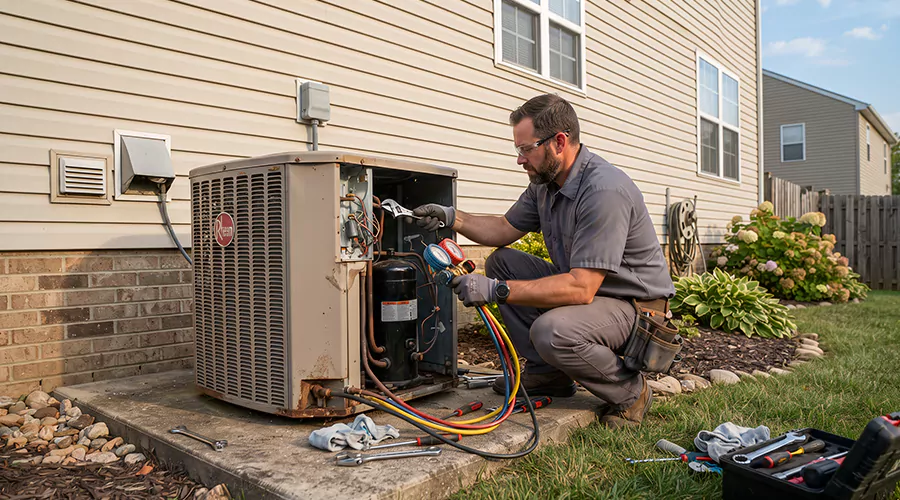
AC compressor repair can cost about $120 to $600 for a related electrical problem in 2026, while confirmed compressor replacement commonly costs $1,200 to $2,800. The price changes sharply because a bad capacitor can mimic compressor failure. An internally damaged sealed compressor usually has to be replaced rather than repaired on-site.
That difference matters when you receive a large estimate. Warm air or humming does not prove that the compressor itself has failed. A technician should rule out the capacitor or contactor before recommending one of the most expensive repairs in a central AC system.
How Much Does AC Compressor Repair Cost in 2026?
Minor compressor-related repairs generally cost about $120 to $600 in 2026. A complete residential compressor replacement usually costs about $1,200 to $2,800. Modern sources place central compressor work around $1,200 to $2,600 with about $1,800 to $2,300 as a common replacement price.
The wide range exists because homeowners often use the phrase “compressor repair” for several different failures:
- A bad capacitor can stop a healthy compressor from starting.
- A damaged contactor can prevent power from reaching the compressor.
- A refrigerant problem can also make the cooling system perform poorly without an internal compressor failure.
2026 Compressor Cost Planning Ranges
| Compressor-related problem | Typical 2026 cost |
|---|---|
| Diagnostic visit | $100 to $250 |
| Start component repair | $120 to $600 |
| Hard-start kit | $100 to $300 |
| Refrigerant-related repair | $200 to $600+ |
| Compressor replacement under parts warranty | $600 to $1,200 |
| Compressor replacement without warranty | $1,200 to $2,800 |
| Difficult or premium compressor replacement | $3,000+ |
HomeGuide places compressor replacement around $600 to $1,200 when the part remains under warranty. Its out-of-warranty range is about $1,800 to $2,800.
The price of the diagnostic visit matters because proper testing can prevent an unnecessary compressor replacement.
Can An AC Compressor Actually Be Repaired?
Residential AC compressors are sealed components. Internal mechanical damage usually cannot be repaired inside the installed outdoor unit. In practice, “compressor repair” often means correcting an external electrical problem. A confirmed internal compressor failure normally leads to replacement of the sealed compressor or the complete condensing unit.
- This distinction can save thousands of dollars.
- Imagine that the outdoor unit hums but never starts.
- A weak capacitor can produce that symptom. Carrier notes that capacitor failure can leave the compressor unable to start even though the compressor itself has not necessarily failed.
- The capacitor is replaceable.
- The sealed compressor is a much larger repair.
- A contactor creates another possible false alarm. The contactor controls power entering major outdoor components. A damaged contactor can stop normal compressor startup.
- Electrical wiring faults can create similar behavior.
- The diagnosis should therefore identify the failed component rather than labeling every no-start condition as compressor failure.
What Are the Signs of a Bad AC Compressor?
A failing compressor can cause warm supply air or repeated breaker trips. Strange outdoor noises can provide another clue. The compressor may also overheat or fail to start. None of these symptoms proves compressor failure because capacitors or refrigerant problems can create similar behavior.
10 Warning Signs of Compressor Trouble
- The indoor blower runs but the house does not cool.
- The outdoor fan operates while normal compressor sound is absent.
- The condenser produces a strong hum without starting normally.
- A breaker trips when cooling begins.
- The outdoor unit develops grinding noises.
- Cooling capacity declines even though airflow remains normal.
- The compressor repeatedly starts then stops.
- The outdoor unit becomes unusually hot during operation.
- Electricity use rises while cooling performance falls.
- The system struggles to restart after shutting off.
Carrier lists no cool air and unusual noise among common compressor warning signs. Repeated electrical trips can also indicate excessive compressor load. One warning sign deserves special attention: a compressor that repeatedly trips a breaker should not be restarted again and again. The breaker may be responding to an underlying electrical or compressor problem that requires professional diagnosis.
Why Does an AC Compressor Fail?
Compressor failure usually develops because the component has operated under damaging conditions or reached the end of its service life. Electrical problems can interfere with startup. Refrigerant problems can change operating pressures. Poor heat transfer can also increase compressor stress during long cooling cycles.
Electrical Start Problems
A weak capacitor can make compressor startup difficult and place additional stress on the compressor. Carrier states that a failing capacitor may also cause humming or short cycling. Electrical connections can affect startup as well. Trane notes that loose connections can prevent the compressor from starting properly and recommends leaving internal wiring work to trained HVAC technicians
Refrigerant Problems
The compressor circulates refrigerant through the cooling system, and low refrigerant caused by a leak can interfere with normal operation. Some systems may shut down through pressure protection when refrigerant conditions move outside the allowed range. Because refrigerant handling is regulated, EPA Section 608 governs service practices for stationary air-conditioning equipment and prohibits the intentional venting of covered refrigerants during service.
Dirty Outdoor Equipment
The condenser needs to release indoor heat outside, and restricted outdoor heat transfer can make the system work harder. A dirty condenser does not automatically destroy a compressor, but long-term high operating stress can contribute to component wear and reduce the system's overall efficiency.
Age and Repeated Operation
Mechanical components wear over time, and a compressor that has already operated through many cooling seasons can become a poor repair candidate when another major component is also deteriorating. Age therefore matters most when considered alongside the compressor’s repair history and the condition of other major components.
How Does Compressor Trouble Progress?
Compressor problems often begin with difficult startup or weaker cooling before reaching complete failure. The early stage can involve a relatively inexpensive electrical component. Continued operation under poor conditions can increase stress. Once internal compressor damage occurs, the repair often changes into a four-figure replacement.
Compressor Progression Stages
| Stage | What you notice | Possible issue | 2026 planning cost |
|---|---|---|---|
| Early | Occasional startup hesitation | Capacitor | $120 to $300 |
| Developing | Clicking or inconsistent startup | Contactor | $200 to $400 |
| Stress | Humming during startup | Start component | $150 to $600 |
| Cooling loss | Longer cycles with poor cooling | Refrigerant issue | $200 to $600+ |
| Electrical failure | Breaker trips during cooling | Compressor or wiring fault | Diagnosis required |
| Internal failure | Compressor will not operate after proper testing | Compressor replacement | $1,200 to $2,800 |
| Major system decision | Older AC needs compressor plus other work | System replacement comparison | Several thousand dollars |
The key cost jump occurs when testing confirms internal compressor failure. Modernize reports that central compressor replacement often falls between $1,200 and $2,600, although more difficult cases can exceed that range. A failed compressor on an older unit can also trigger a larger financial decision because repairing the compressor may restore cooling, but it does not make the remaining coil or fan motor new.
Can You Test an AC Compressor Yourself?
A homeowner can safely observe the startup sequence without opening the electrical cabinet. Set the thermostat to cooling and lower the target temperature by about 5°F. Wait five minutes. Then observe whether the outdoor fan starts and listen for the normal compressor sound. Do not touch electrical components.
- Start with the thermostat.
- Confirm that Cool is selected.
- Check whether indoor airflow begins.
- Then observe the outdoor condenser from a safe distance.
- Listen for normal startup.
- A click followed by silence is useful information.
- A strong hum is another useful observation.
- Write down whether the outdoor fan spins.
- Next check the electrical panel visually.
Do not keep resetting a breaker that trips again. Trane advises against repeatedly restoring power without finding the reason for the trip. Do not test a capacitor with improvised tools or remove compressor terminals.
Do not connect refrigerant gauges. EPA rules apply to refrigerant handling in stationary systems, and certified technicians are required for covered service activities involving refrigerant.
When Should You Call a Professional?
Professional diagnosis is appropriate when the condenser hums without starting or repeatedly trips its breaker. It is also needed when normal thermostat checks do not restore compressor operation. Refrigerant work requires proper recovery equipment. Internal electrical testing requires procedures that should not be attempted through homeowner trial and error.
- A technician should first confirm that the thermostat is sending the correct cooling call.
- Incoming voltage can then be tested.
- The capacitor should be measured against its rated value.
- The contactor can also be checked before the compressor is condemned.
- Compressor current gives another piece of evidence.
- Winding tests can help identify electrical damage inside the compressor.
- A refrigerant circuit diagnosis may be needed when electrical testing is normal but cooling performance remains poor.
If replacement is required, the procedure involves more than removing one part. Refrigerant must be recovered before the sealed system is opened, and the new compressor must then be installed into a clean refrigerant circuit. The system is then evacuated before the correct refrigerant charge is restored. EPA states that covered refrigerant cannot simply be vented during maintenance or repair. If you're comparing AC compressor repair near me results, ask each contractor what test confirmed internal compressor failure. A diagnosis should name the evidence, because a recommendation based only on sound is not enough for a repair that can cost thousands.
Should You Repair the Compressor or Replace the AC?
Compressor replacement makes more sense when the rest of the AC is in good condition and the compressor has valuable parts-warranty coverage. Full system replacement becomes more reasonable when the equipment is old or needs other expensive work. Refrigerant type can also influence the financial comparison.
- Start with the compressor quote.
- Then compare the age of the outdoor unit.
- Look at the indoor coil condition.
- Review previous repair history.
- Warranty status can make a large difference.
A compressor covered by a manufacturer parts warranty can leave the homeowner paying mostly labor or related materials. HomeGuide reports roughly $600 to $1,200 for many warranty-covered compressor replacements. Without parts coverage, the same decision changes. A $2,500 compressor replacement deserves careful comparison when the complete AC is approaching the end of its service life.
The HVAC compressor replacement decision should also account for compatibility with the remaining equipment. EPA notes that air-conditioning components are designed for specific refrigerants, and changing refrigerant platforms can require component changes rather than a simple refrigerant substitution. One practical rule is to compare the compressor quote with the installed price of a properly matched replacement system. Do not compare the repair quote with online equipment-only pricing.
How Can You Reduce Compressor Failure Risk?
Compressor protection starts with correcting small operating problems before they become prolonged stress. Replace dirty filters before airflow becomes severely restricted. Keep the outdoor condenser free from heavy debris. Pay attention to difficult startup or breaker trips because those symptoms can reveal electrical problems before complete compressor failure occurs.
- Do not ignore a new humming sound.
- A weak capacitor can place added stress on the compressor.
- Do not keep operating an AC with a frozen indoor coil.
Carrier advises shutting cooling off when ice develops because frozen-coil operation can contribute to compressor damage.
- Have refrigerant leaks repaired rather than treating repeated recharging as routine maintenance.
- Refrigerant does not normally disappear from a sealed cooling system.
- Watch the outdoor condenser during the first heavy cooling period each year.
- A change in sound can reveal a developing problem.
- Check whether the system reaches the thermostat setting within its normal operating pattern.
- A compressor often costs far more than the smaller electrical parts that support it.
- Early attention to startup problems can therefore have a large financial payoff.
Conclusion
AC compressor repair ranges from inexpensive start-component work to a replacement costing $1,200 to $2,800 in 2026. Humming or warm air does not prove the compressor has failed. Confirm the diagnosis before approving replacement. Warranty coverage can change the decision substantially. This week, listen to one complete cooling startup and record any new clicking or humming before the next peak cooling period.
Frequently Asked Questions
Yes. A failed capacitor can prevent a healthy compressor from starting. Humming is one common clue. The capacitor should be tested before compressor replacement is recommended.
Many straightforward replacements require several hours. The process includes refrigerant recovery plus sealed-system work. Evacuation and recharging are also required before normal operation resumes.
It can be. Manufacturer parts warranties often cover compressors longer than some other components. Labor can still be charged even when the replacement compressor itself is covered.
Improper refrigerant conditions can interfere with compressor operation. Low refrigerant caused by a leak can also trigger protective shutdowns on some systems.
Often the full system deserves comparison at that age. A compressor replacement can cost more than $2,000 while the remaining components are still old. Condition and warranty status should guide the decision.
Residential compressor replacement is not a normal DIY repair. The job involves high-voltage equipment and sealed refrigerant work. EPA rules also govern refrigerant recovery during stationary AC service.