 Reviews

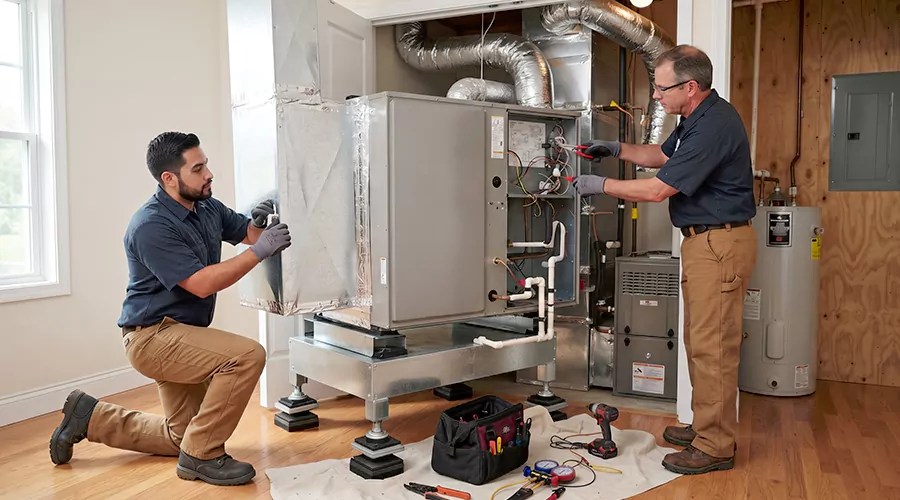
Air handler installation typically costs about $1,500 to $3,500 in 2026 for a standard residential replacement. Many homeowners spend around $2,300 to $2,800. Larger units or variable-speed equipment can push the installed price above $4,000.
The equipment itself often costs $700 to $1,600. Professional labor can add another $800 to $1,800. If the existing air handler has a minor issue before replacement, air handler repair may be an option instead of installing a new unit.
The final price changes when the installer must modify ducts or electrical connections. Difficult attic access can also increase labor.
What Is the Average Air Handler Installation Cost in 2026?
A typical residential installation costs about $1,500 to $3,500 in 2026. Straightforward replacements usually stay near the middle of this range. Larger equipment can cost more. Variable-speed models can also push installed pricing above $4,000 before major duct modifications are added.
Installation Level Planning Table
| Installation level | Typical 2026 cost |
|---|---|
| Basic replacement | $1,500 to $2,200 |
| Typical installation | $2,200 to $3,000 |
| Larger air handler | $2,800 to $4,200 |
| Variable-speed model | $2,800 to $4,200 |
| Difficult installation | $3,500 to $5,000+ |
| Major duct changes added | $1,400 to $5,600 extra |
The air handler cost itself is only part of the total. Labor can represent about half of the project, so a low equipment price can be misleading when installation conditions are difficult.
How Much Does an Air Handler Cost by Size?
Larger air handlers usually cost more because they need greater airflow capacity. Residential equipment commonly ranges from about 1.5 to 5 tons. Installed pricing can begin near $1,500 for smaller systems. Large 4-ton or 5-ton replacements can reach about $4,200.
Size Planning Table
| Air handler size | Typical installed cost |
|---|---|
| 1.5 ton | $1,500 to $2,000 |
| 2 to 2.5 ton | $1,700 to $2,400 |
| 3 to 3.5 ton | $2,000 to $3,000 |
| 4 to 5 ton | $2,800 to $4,200 |
These numbers should not be used to select equipment size. A larger house often needs more capacity, but square footage alone cannot determine the correct size. Insulation affects the heating and cooling load, window exposure matters too, and climate also changes the requirement. The indoor equipment should match the capacity of the outdoor system. Installing a larger unit simply because it seems more powerful can create comfort problems.
What Does the Air Handler Actually Do?
An air handler is the indoor part of many ducted heating and cooling systems. It contains the blower that moves conditioned air through the home. Most units also contain the indoor coil and filter. Some models include electric heating elements. An air handler unit works with an outdoor air conditioner or heat pump.
Return air enters the indoor cabinet. The filter removes larger airborne particles. Air then passes across the indoor coil, and the blower pushes conditioned air into the supply ducts. During cooling, the coil also removes moisture from the air, which makes the indoor equipment important for humidity control. The blower is equally important. A perfectly operating outdoor condenser cannot cool the house properly without enough indoor airflow.
What Makes Air Handler Installation More Expensive?
Installation becomes more expensive when the contractor must modify surrounding systems. Duct changes can add hundreds or thousands of dollars. Electrical upgrades can increase labor. A difficult attic location takes more time. Equipment capacity and blower technology can also affect the final price.
Equipment Type
Single-speed equipment is usually the least expensive. A basic model may cost around $1,500 to $2,200 installed. Multi-speed equipment commonly costs about $2,000 to $2,800. Variable-speed equipment can reach $2,800 to $4,200.
Variable-speed blowers can adjust airflow as operating conditions change. The added control technology increases the initial price.
Duct Modifications
Existing duct connections do not always fit the new cabinet. Minor duct repairs can cost about $200 to $700, while complete new ductwork can add $1,400 to $5,600 or more. The installer should identify necessary changes before work begins.
Electrical Work
An air handler requires the correct electrical supply. New wiring can add electrician labor, and electric heat strips can also change electrical requirements. An older electrical circuit may need modification before installation.
Permits
Permit and inspection fees commonly add about $100 to $250. Actual requirements depend on local codes. The quote should explain whether permit costs are already included.
Does Variable-Speed Equipment Cost More?
Variable-speed equipment usually costs more because the blower can operate across a range of speeds. Installed prices often fall around $2,800 to $4,200 in 2026. The benefit is more precise airflow control. The extra upfront cost should be evaluated against the needs of the complete system.
A single-speed blower generally runs at one main operating speed, while a multi-speed blower provides several preset choices. Variable-speed equipment makes smaller airflow adjustments.
That can improve temperature consistency and support better humidity control during cooling. Noise can be lower during reduced-speed operation. The upgrade is not necessary for every home. A basic properly sized system can still provide good comfort. The outdoor equipment must also be compatible with advanced blower controls.
Why Does System Matching Matter?
The indoor and outdoor equipment must work together as one system. Airflow and coil capacity need to match the outdoor condenser or heat pump. Installing an incompatible indoor component can reduce performance. It can also create operating problems that a more expensive air handler cannot solve.
The HVAC air handler should not be selected as a separate appliance. The indoor coil has a rated capacity, and the outdoor unit also has a rated capacity. Those components need an approved combination. The blower must move enough air across the coil. Low airflow can make the coil too cold, while excessive airflow can reduce moisture removal. A matched system becomes especially important when replacing only the indoor equipment.
Ask for the proposed indoor model number. Then ask which outdoor equipment it is designed to operate with.
How Much More Does Attic Installation Cost?
An attic installation can cost more when access is limited or the equipment is difficult to remove. Tight framing can increase labor. Additional drain protection may also be necessary. The exact premium varies because one open attic can be simple while another requires significant access work.
Horizontal air handlers are common in attics. Closets often use vertical configurations. Basements can usually provide easier access, and garages can also allow simpler equipment removal.
A difficult attic creates several concerns. The old cabinet may be hard to remove, and the new cabinet may need to pass through a small opening. Drainage needs careful attention because a leak above finished ceilings can cause expensive damage. The installation quote should identify access problems before work begins. Avoid assuming an attic installation always costs more. Easy attic access can still produce a straightforward project.
What Extra Costs Can Be Added to the Installation?
The initial equipment quote may not include every required modification. New ducts can add thousands of dollars. A thermostat can add another $140 to $350. Electrical work can increase labor. Moving the equipment to another location can add roughly $1,500 to $3,000.
Additional Expenses Planning Table
| Additional work | Typical 2026 cost |
|---|---|
| Permit and inspection | $100 to $250 |
| Minor duct repair | $200 to $700 |
| New thermostat | $140 to $350 |
| Coil cleaning | $100 to $400 |
| New ductwork | $1,400 to $5,600 |
| Move air handler location | $1,500 to $3,000 |
Relocating the equipment costs more because several systems may need modification. The duct connections must move, the condensate drain can also require rerouting, electrical wiring must reach the new location, and refrigerant piping may need changes too. Ask whether these items are included before comparing installation quotes.
How Does an Air Handler Problem Progress?
Air handler problems often begin with airflow changes before the system stops completely. A dirty filter can be inexpensive to correct. A developing blower problem costs more. Coil failure can push the repair into four figures. Older equipment with several major problems can eventually justify replacement.
Problem Progression Table
| Stage | What you notice | Possible issue | Typical cost impact |
|---|---|---|---|
| Early | Slightly weaker airflow | Dirty filter | Low DIY cost |
| Developing | Uneven airflow | Blower or duct issue | $100s possible |
| Moderate | New motor noise | Blower problem | $200 to $900+ |
| Significant | Water near unit | Drain or coil issue | $100s possible |
| Major | Indoor coil fails | Coil replacement | $400 to $2,400+ |
| End stage | Several major failures | Replacement | $1,500 to $3,500+ |
Repair should be considered before replacement when the equipment is otherwise healthy. A relatively inexpensive motor problem does not automatically justify a new system. The calculation changes when an older unit needs several expensive components. Age should be considered with repair history.
What Are the Signs an Air Handler May Need Replacement?
Replacement deserves consideration when airflow problems continue after ordinary maintenance or when major components fail repeatedly. Age also matters when repair costs begin rising. One symptom is not enough to prove replacement is necessary. Several persistent problems create a stronger case.
10 Warning Signs of Air Handler Failure
- Airflow remains weak with a clean filter.
- The blower repeatedly fails to start.
- Grinding noises come from the indoor cabinet.
- Several rooms receive uneven airflow.
- Water repeatedly appears near the equipment.
- The indoor coil develops recurring problems.
- Electrical repairs have become frequent.
- The blower motor has already needed major work.
- Heating and cooling performance continues to decline.
- Repair estimates approach a large share of replacement cost.
An old system can still be worth repairing when the problem is small. A newer system can sometimes need replacement after severe damage. Condition matters more than age alone.
What Can You Safely Check Before Requesting Installation Quotes?
A homeowner can collect useful information without opening electrical panels or refrigerant connections. Photograph the equipment label and record the current model number. Check the filter size. Note rooms with weak airflow. Inspect only visible duct connections from a safe location.
- Start with the equipment label.
- Take a clear photo.
- Record the outdoor unit model too.
- Note the approximate age of both components.
- Check whether the existing thermostat controls a heat pump.
- Write down rooms that have always felt uncomfortable.
- Look for visible water around the indoor cabinet.
- Listen to the blower during one full operating cycle.
Do not remove electrical access covers. Do not open refrigerant connections. Avoid entering an unsafe attic. These observations make professional estimates more useful. They also help determine whether replacement should address an existing airflow problem.
When Should You Call a Professional?
Professional evaluation is appropriate when airflow remains poor after a clean filter is installed. It is also important when the blower will not run or water repeatedly appears around the cabinet. Installation requires electrical and refrigerant work that should be completed by properly qualified professionals.
- A technician can measure system airflow.
- Static pressure can also be checked.
- The indoor coil can be inspected.
- Blower operation can be evaluated.
- The outdoor equipment should then be matched with the proposed replacement.
- Ask whether duct changes are required.
- Ask whether electrical modifications are included.
- Find out whether the condensate drain will be replaced.
- Request exact model numbers before approving the project.
This makes quote comparison much easier. A professional installation should solve the equipment problem without preserving an existing airflow design problem.
When Is Repair Better Than Replacement?
Repair is usually better when the air handler is relatively young and the failed component is inexpensive. Replacement becomes easier to justify when an older unit needs a costly coil or repeated motor repairs. Comparing one repair estimate with the complete installed replacement price gives better context. A $300 repair can make sense on an older system, while a $2,000 repair creates a different decision.
Consider the condition of the outdoor equipment too. Replacing the indoor section shortly before an old outdoor unit fails can create another major project. Compatibility can also limit future choices. If both components are near the end of their useful life, then a complete-system comparison becomes useful. Do not replace equipment only because a contractor mentions its age. Ask what has actually failed.
How Can You Protect a New Air Handler?
A new air handler lasts longer when airflow stays unrestricted and drainage remains clear. Filters need regular attention. Water around the cabinet should never be ignored. Annual professional maintenance can also identify blower or drain problems before they become larger repairs.
- Check the filter every one to three months.
- Actual replacement frequency depends on filter type and home conditions.
- Keep return grilles unobstructed.
- Avoid blocking supply registers.
- Watch the drain area during cooling season.
- Listen for changes in blower sound.
A basic annual HVAC maintenance visit often costs about $175 to $350. Compare that with a major motor or coil repair. Maintenance cannot prevent every failure, but it can make developing problems easier to identify. Keep installation paperwork as well. Save the equipment model numbers and warranty information.
Conclusion
Air handler installation usually costs about $1,500 to $3,500 in 2026 with many projects near $2,300 to $2,800. Larger equipment or variable-speed blowers can raise the total. Duct changes and difficult access can add much more. Compare exact model numbers and installation scope before choosing a quote. This week, photograph your indoor and outdoor equipment labels before requesting estimates.
Frequently Asked Questions
A straightforward replacement can often be completed in one working day. Difficult attic access or major duct modifications can extend the project.
Many residential air handlers last around 12 to 15 years. Maintenance and installation quality can affect actual service life.
No. A furnace creates heat through combustion or electric heating. An air handler mainly moves conditioned air and commonly works with an air conditioner or heat pump.
Yes when the new indoor equipment is compatible with the existing outdoor system. Capacity and control compatibility should be verified before replacement.
Many residential installations include an indoor coil as part of the assembly or matched installation. The proposal should state clearly whether the coil is included.
Not automatically. Keeping the outdoor unit can make sense when it is relatively new and fully compatible. Older outdoor equipment deserves a full-system cost comparison before the indoor unit is replaced.